Species guide
Tetraselmis
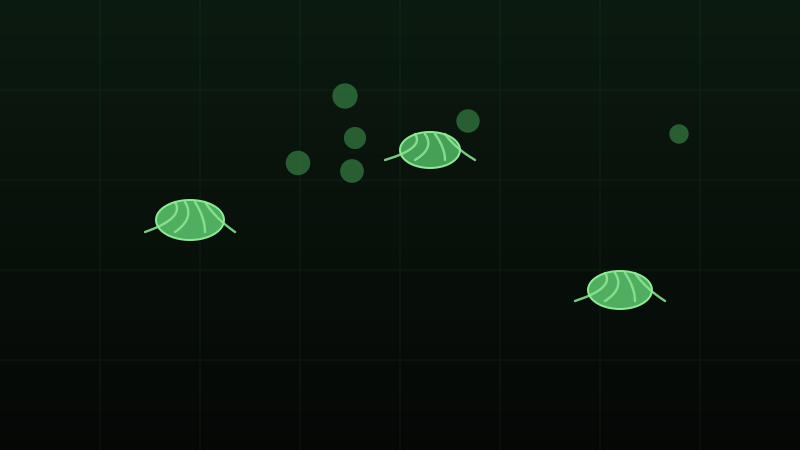
Tetraselmis is the big, confident cell of the live-feed world: four flagella, starch in the bank, and a temperament that forgives beginners. It covers the size range the small flagellates leave empty and brings reported antibacterial behaviour that hatcheries quietly appreciate.
- What it is
- A genus of relatively large, motile green microalgae used across marine live feeds.
- Taxonomic group
- Chlorodendrophyceae (prasinophyte green algae); T. suecica and T. chuii are common in culture.
- Typical appearance
- Ovoid green cells with four flagella and a cup-shaped chloroplast; motile under the microscope.
- Typical size
- Cells roughly 8–15 µm (species- and strain-dependent).
- Culture characteristics
- Robust and fast-growing; tolerates a wide salinity range and stores visible starch reserves. Larger size suits bigger grazers and later larval stages.
- Major applications
- Bivalve and crustacean larval feeds, copepod diets, green water, reported antibacterial applications in larviculture.
- Typical users
- Bivalve and shrimp hatcheries, copepod culturists, feed producers, research labs.
Why aquaculture values it
Tetraselmis adds the size class the small flagellates cannot cover. As larvae grow, rations shift toward larger cells — Tetraselmis is the classic addition for pediveligers, later copepod stages and crustacean zoeae. It is also beginner-friendly: forgiving, fast, and hard to kill accidentally.
Nutrition and important compounds
It stores starch and lipids in useful quantities and carries a pigment and sterol profile different from the haptophytes — part of why mixed rations outperform mono-diets. Several studies report antibacterial properties of Tetraselmis extracts or culture water; we flag that as promising research, not settled practice.
A note on culture parameters
Culture parameters vary between species (T. suecica and T. chuii behave differently) and strains. Published figures are starting points, not guarantees.
Frequently asked questions
Is Tetraselmis good for beginners?
Yes — among the most forgiving marine species, which is why it pairs with Nannochloropsis as a standard starter pair.
Why is Tetraselmis described as antibacterial?
Several studies report antibacterial effects from Tetraselmis cells or extracts in larviculture. Promising and increasingly used, but not a substitute for hygiene.
Tetraselmis vs Chlorella?
Both green algae; Tetraselmis is marine-friendly, larger and motile, Chlorella smaller, non-motile and mostly freshwater. They rarely substitute for each other.