Observe
Turn cells, cultures, and changing environments into records that can be inspected.
ORR BIOLOGICALS / BIOLOGICAL CINEMA
We build instruments and computational tools for observing biological change, modeling its constraints, and keeping the evidence in view.
FIELD NOTE / 01Volvox-inspired fluorescent scene. A procedural scientific visualization, not a microscope observation. Scroll to move from colony to culture vessel.
02 / CULTURE VESSEL
Scroll through a proposed photobioreactor study. The scene is procedurally modeled in Three.js; it illustrates a research direction, not a deployed instrument.
02 / THE HEAD WORKS
A port cluster on the lid accepts probe stems and sample lines. The elbow above it is a condenser path, not decoration.
02 / THE CIRCUIT
An airlift draft tube bubbles medium upward while a pump loop feeds media in from a bottle and draws harvest out. Light comes from a panel behind the vessel.
Illustrative sceneGlass, culture volume, draft tube, ports, pump loop, LED panel. No measured telemetry or validated performance is shown.
03 / THE QUESTION
Living systems are not dashboards. They are changing cultures, individual cells, imperfect sensors, and observations that need context.
Orr Biologicals works at the boundary between biology in motion and the people trying to understand it. The projects below are research concepts in development. Their visualizations are synthetic and their claims stay proportional to the evidence available.
Turn cells, cultures, and changing environments into records that can be inspected.
Use biological constraints and counterfactuals instead of confident black-box guesses.
Separate an interesting signal from a validated result before it becomes a decision.
04 / RESEARCH SYSTEMS
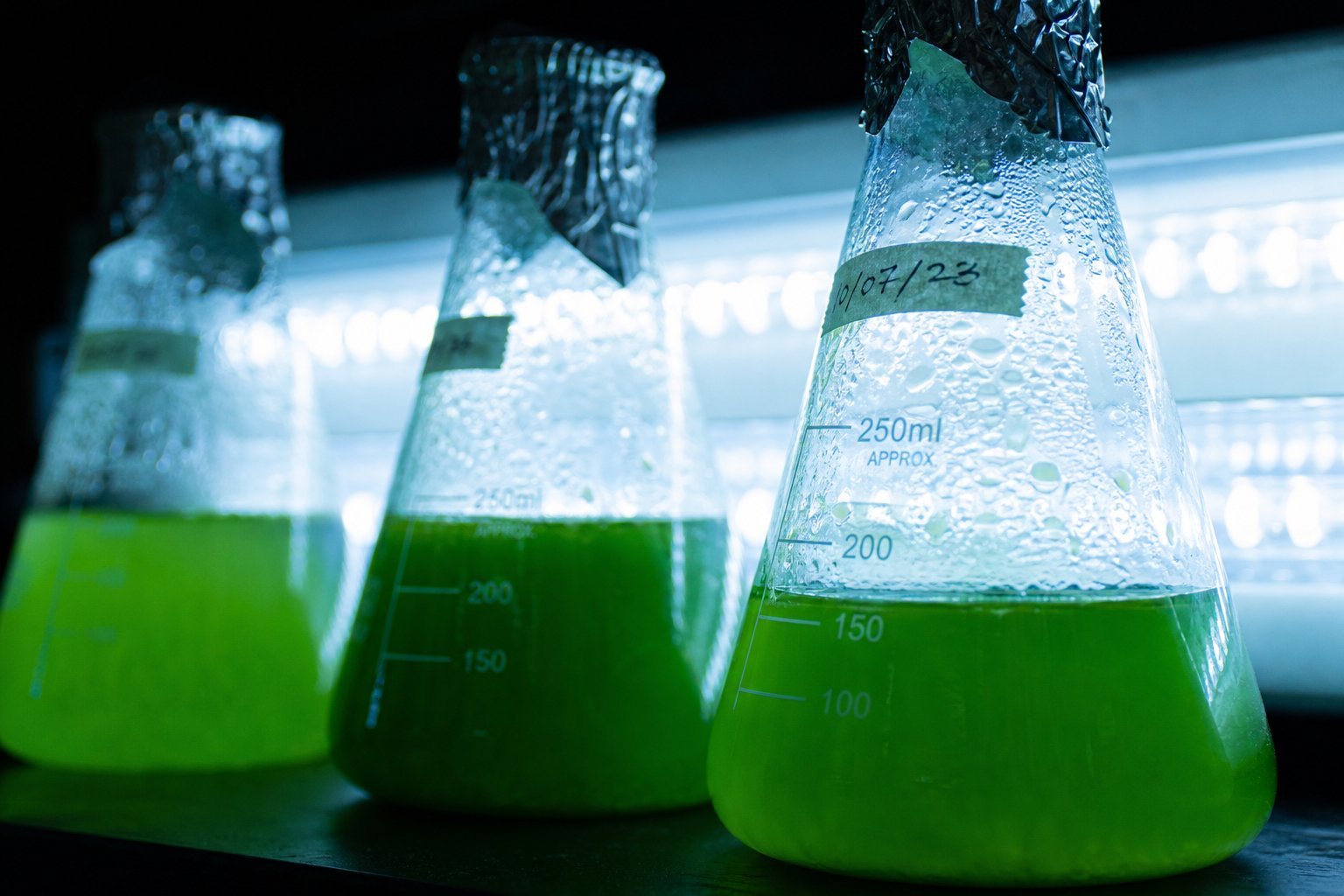
Algaephyte studies the culture as a changing environment. Cyanoflow follows variation at the level of individual cells. Neither is presented as a finished commercial product.
 01 / CULTURE-SCALE OBSERVATION
ALGAEPHYTE
Sensor context, optical signals, and physics-informed modeling for understanding how a living culture moves through time.
Enter the cultivation concept ↗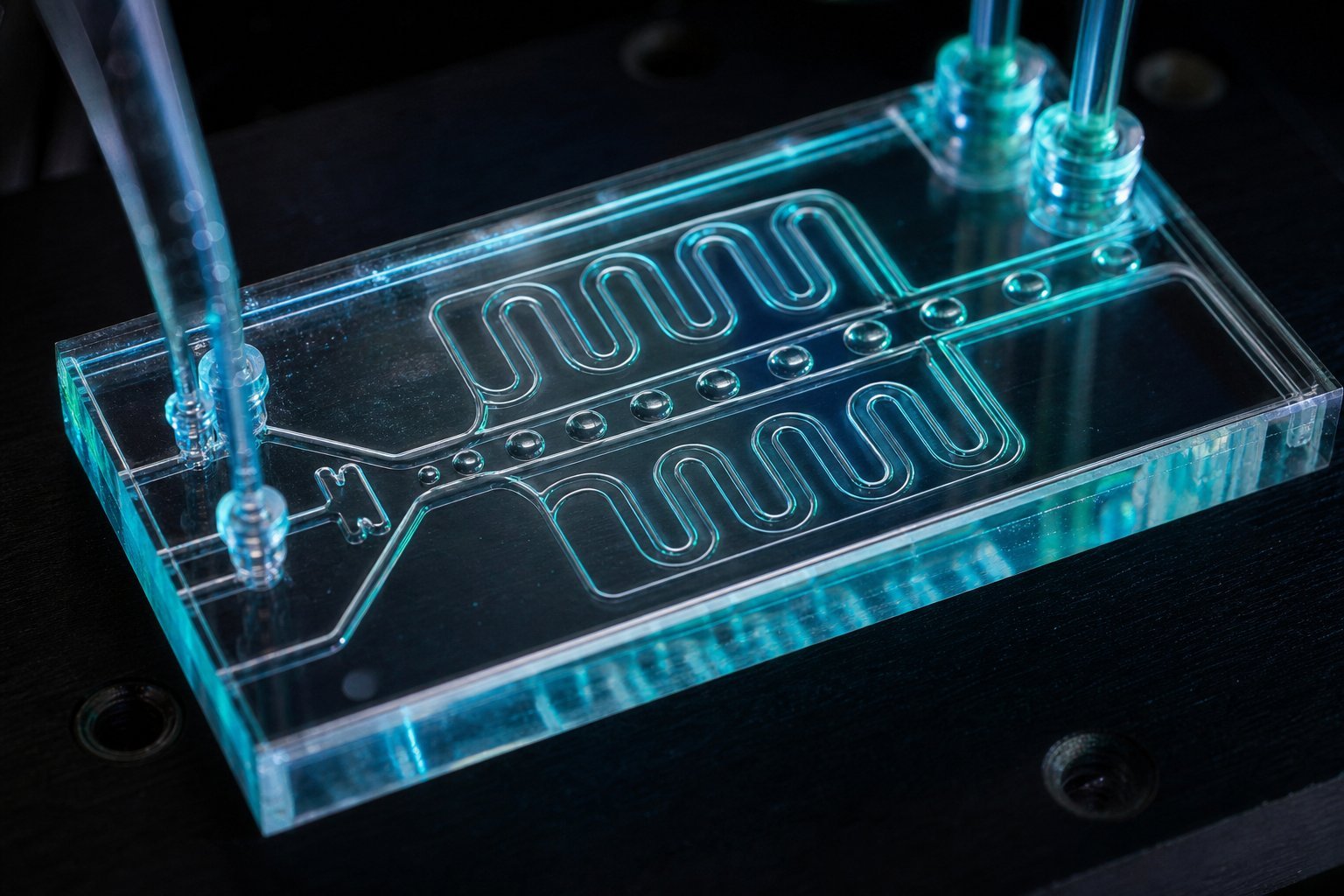 02 / SINGLE-CELL DISCOVERY
CYANOFLOW
Microfluidic compartments, time-series imaging, and candidate investigation for individual cells and their trajectories.
Enter the single-cell concept ↗05 / THE METHOD
Individual cells, culture conditions, and the limits of the instrument stay visible.
Digital twins and mechanistic models help test relationships without pretending they are measurements.
Uncertainty is part of the output. Validation is a separate step, not a decorative footnote.
06 / OPEN RESEARCH
Read the biological and engineering questions behind the visual systems.
FIELD NOTE / DIGITAL TWINS
State variables, counterfactuals, and why a model remains a model until it meets observations.
Read the note ↗Single-cell analysis with microfluidics
How compartments and imaging turn variation into searchable data.Computer vision and contamination detection
What an optical signal can suggest—and what it cannot prove.Droop, Steele, and growth limitations
Making assumptions explicit before a forecast is trusted.07 / RESEARCH CORRESPONDENCE
Tell us what you are trying to observe, model, or validate. This form opens an email draft; nothing is sent until you choose to send it.