Live cultures ship Monday–Wednesday·US only·Live arrival guaranteed
Orr BiologicalsLive microalgae · 16 oz

Home / Articles / Algae news

Algae news.

A standing desk for the parts of algae work that keep coming back: feed, light, contamination, pigments and the measurement that decides whether any of it worked. Ten briefs, written to be useful to someone with a flask on the bench.

Desk 00110 briefsEditorial summariesNot peer review

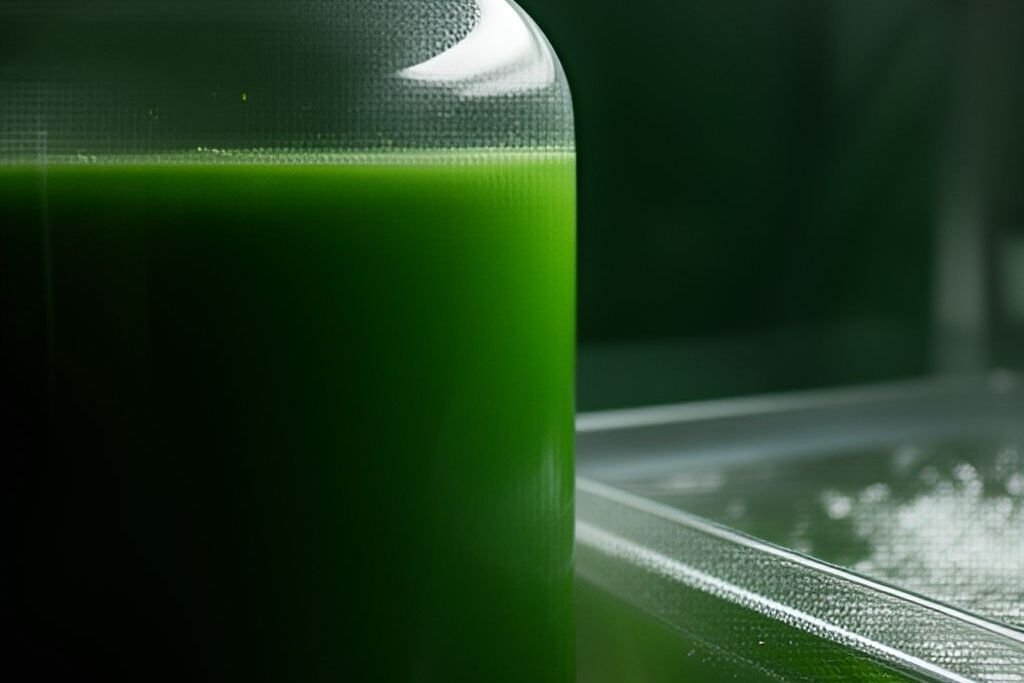
Generated image: a clear carboy of dense green microalgae beside a larval rearing tank under soft overhead light.
Generated image — illustrative, not a photograph of a specific culture or facility.

Feed

Live cells still do what dried feed cannot

Bivalve larvae take particles from suspension, and hatcheries feed them live microalgae because the cell is the ration: size, digestibility and the fatty acid and sterol profile all arrive intact. Chaetoceros, Isochrysis, Pavlova and Tetraselmis are grown in bags, carboys or columns and dosed by cell count. The daily work is not the species list — it is keeping a clean, dense culture on schedule so there is something to dose.
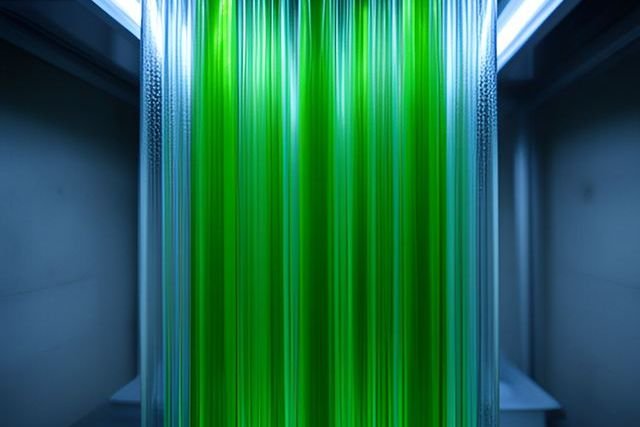
  1. Generated image: vertical glass photobioreactor tubes of green algae culture glowing under cool LED panels.

    Cultivation

    Light path, not reactor volume, sets the design

    As a culture thickens it shades itself, so reactors shorten the light path with narrow panels, tubes or internal illumination, and mix hard enough to cycle cells between lit and dark zones. LEDs and fibre delivery are established options. Overheating and uneven illumination, not vessel size, are what cap productivity.

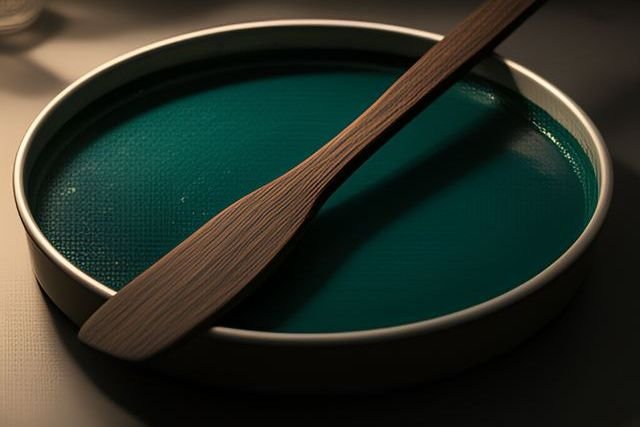
  2. Generated image: a shallow tray of deep teal spirulina culture with a wooden paddle resting on the rim.

    Food

    Spirulina's protein holds; its price is the argument

    Spirulina is a cyanobacterium grown in warm alkaline bicarbonate media, then harvested and dried into powder, flakes or tablets. Protein content is high and the cell wall is easy to digest. Taste, colour and cost per kilo decide where it lands in food and feed — not the protein number alone.

  3. Generated image: an open raceway pond of green algae water at dusk with concrete edges and distant industrial silhouettes.

    Water

    Wastewater algae turn a disposal cost into a harvest

    Algae take up nitrogen and phosphorus as they grow, so a treatment pond can strip nutrients that would otherwise fuel eutrophication. Recovering the biomass as fertiliser, feed or energy is the difficult half. Performance tracks climate, loading rate and whether harvest can be relied on week after week.

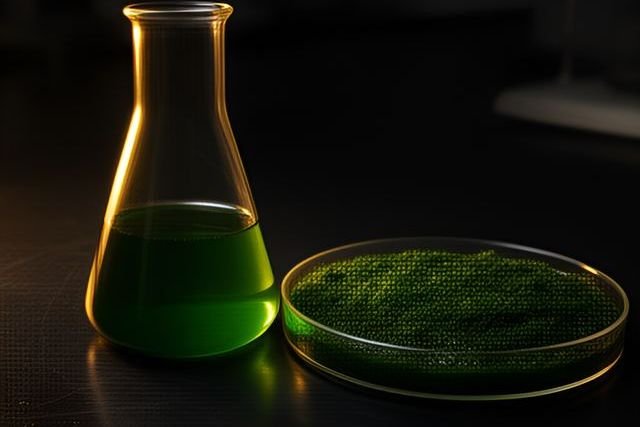
  4. Generated image: a glass flask of green algal oil beside algae biomass in a petri dish on a dark bench.

    Energy

    Biofuels and carbon capture share one bottleneck

    Flue gas can feed ponds and photobioreactors, and the biomass yields oils plus residues. But dewatering and harvesting consume much of the energy the fuel would return, and that is where the carbon arithmetic is decided. Cultivation is rarely the limiting step; separation usually is.

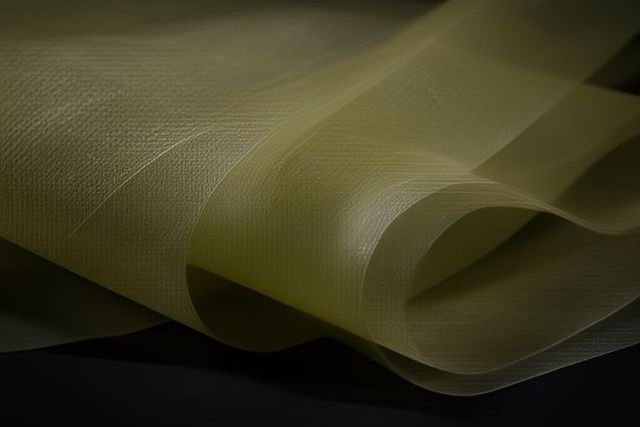
  5. Generated image: translucent green-brown bioplastic film sheets curling on a dark surface under directional light.

    Materials

    Algal bioplastics are a feedstock story

    Algal starch and lipids can be blended with, or converted into, bioplastic films and moulded goods. The pitch is a renewable feedstock; the constraint is consistent supply at a price a manufacturer will accept. Drying and separation dominate the cost long before the material reaches a converter.

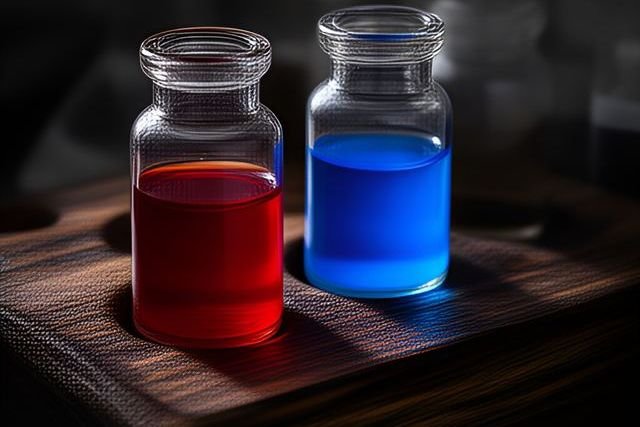
  6. Generated image: vials of deep red astaxanthin and vivid blue phycocyanin pigment extracts on a dark wooden rack.

    Pigments

    The pigment fraction pays for the culture

    Carotenoids, chlorophyll and phycobiliproteins are the high-value fraction. Haematococcus under stress accumulates astaxanthin, Dunaliella beta-carotene, Spirulina phycocyanin. The stresses that raise pigment also slow growth, so the trade is managed deliberately rather than pushed to a maximum.

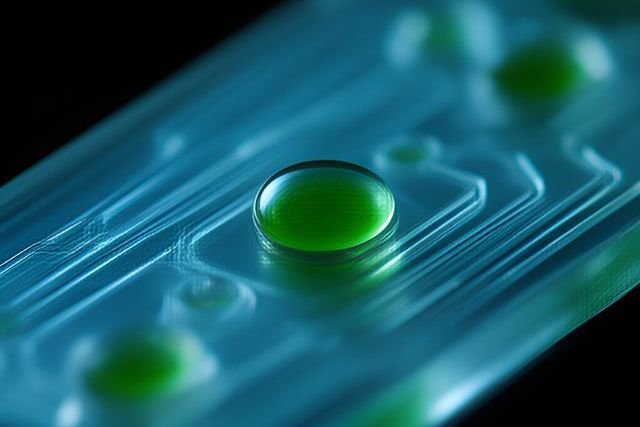
  7. Generated image: a transparent microfluidic chip with etched channels and droplets of green algae culture under cool light.

    Measurement

    Microfluidics finds the cell the average hides

    Droplet and microwell devices isolate single cells so growth, lipid and pigment can be measured one at a time. Paired with imaging or sequencing, they expose variation that bulk sampling averages away. The payoff is strain selection and phenotyping; it is not yet a routine cultivation tool.

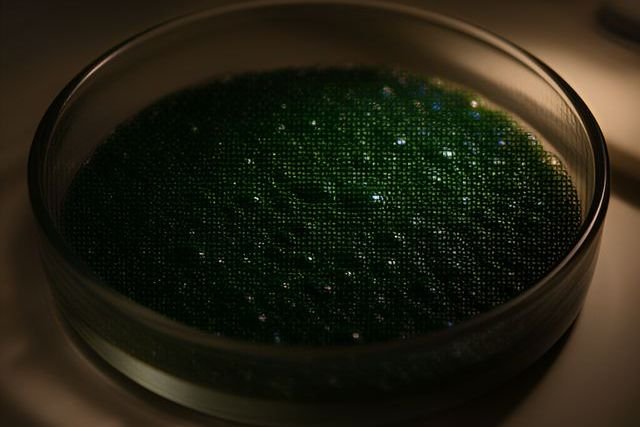
  8. Generated image: dark green cyanobacterial mats with visible bubble texture in a shallow glass vessel.

    Nitrogen

    Cyanobacteria fix nitrogen where rice already grows

    Filamentous cyanobacteria carry nitrogenase in specialised heterocysts and reduce atmospheric nitrogen to ammonia. In flooded paddies, Azolla with its Anabaena symbiont has a long history as a nitrogen source. Reliability across seasons and scale is still the open question, not the biochemistry.

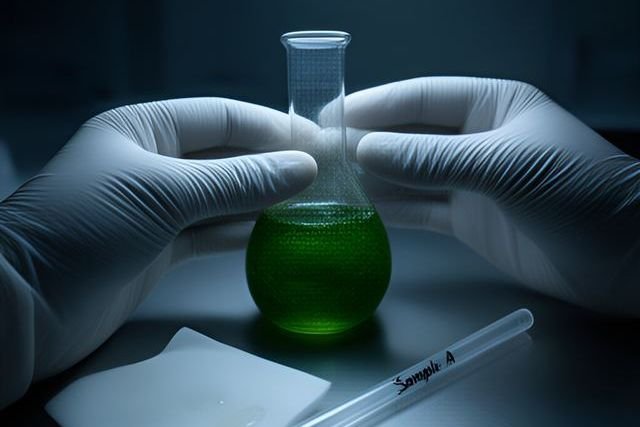
  9. Generated image: gloved hands holding a cotton-plugged flask of green algae culture beside an alcohol wipe and a labelled tube.

    Hygiene

    Contamination control is routine, not rescue

    Sterile inoculation, autoclaved vessels and media, filtered air and scheduled microscopy are the core of it. Culling a suspect culture early and cleaning between batches works better than treating a crash after the colour changes. What reads as a nutrient problem is often a persistent contaminant.

What we are watching

  • Reactor geometries that shorten the light path without giving up working volume.
  • Feed formulations that survive a hatchery tank rather than a lab flask.
  • Cheap, reliable sensing for biomass and contamination — the gap that makes everything else hard to schedule.

How this desk works: every brief here is an editorial summary of established practice, written for people doing the work. None of it is peer review, none of it reports a new finding, and none of it is a product claim. Where a primary source exists we link it; where the evidence is thin, the brief says so. Images on this page are generated illustrations, labelled as such. Corrections and primary sources are welcome through the contact page.