
Superior Phytoplankton: Science Behind Our Quality
Discover how we maintain our superior phytoplankton using advanced scientific methods. Learn about our commitment to quality and innovation in phytoplankton production.
STRAINS
3/31/20262 min read
The Problem
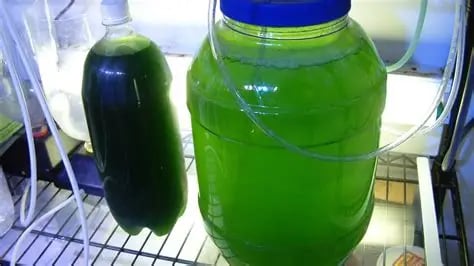
Phytobloom is a mixture of Chaetoceros muelleri, Tetraselmis chuii, Rhodomonadas salina, Tisochrysis lutea, and Pavlova lutheri. This blend is optimized to cover literally every nutritional need of copepods and bivalves.
Many sellers provide customers with limiting microalgae mixes in the form of monocultures, only including one or two species. This can significantly reduce growth rates in copepods and bivalves. While green water is cheaper, it is by far not optimal, offering incomplete nutrition. Furthermore, stop purchasing phytoplankton bags jammed with multiple microalgae strains. Phytoplankton cells may dominate over each other, leading to inconsistencies in nutrition, because fast growing Phyto can outcompete their slow growing neighbors.
Here is a dirty secret many sellers don't want you to realize; many phytoplankton cultures are contaminated. They grow phytoplankton in carboys that have not been sterilized or autoclaved. This carries a huge risk to dependent hatcheries, as Vibrio bacteria carries a 100% mortality rate within 24-48 hours for bivalve larvae, resulting in thousands of dollars in losses.
While a microalgae mixture may look perfect on paper, there is still room for improvement that we strive to address. Tetraselmis, a green microalgae, can range from 5-25 microns. This means small copepod and bivalve larvae (especially in the nauplii and d hinge stage) are physically incapable of consuming these microalgae, as they are limited by their esophagus and mouth size.
In terms of feeding, phytoplankton are sold in a concentrated form, either live or in a dead concentrate. Many growers look at the phytoplankton culture, determines that it is dark enough by sight, then sell. We measure precisely with a secchi stick and microscope verification. Concentrates are okay for extremely sensitive filter feeders who need the sterile environment, but are not good for long term use.
Vendors also use nannochloropsis, which is hard for very early larvae to digest due to it's thick cell walls.
The PhytoBloom solution
We plan to separately package your phytoplankton strains in vials to prevent mixing between different algal species. In addition, we offer 5 axenic (contamination free) phytoplankton species to ensure your are getting needed nutrients. We include a guide on the required dosage and ratios depending on the larvae stage. We do all our work under a still air enviroment to prevent settling spores of bacteria and fungi. To add another layer of protection we autoclave all our products we know are not sterile. Lastly, we will give optimal microalgae cell sizes and concentrations to ensure your organisms are digesting the microalgae.
Coming Soon:
Optimized light spectrums
Brown, M.R. et al. (1997) – Microalgal diets for aquaculture
Helm, M.M. et al. (2004) – Hatchery culture of bivalves
© 2026 Orr Biologicals. All rights reserved.
Phyconet is an experimental open‑source project. Results will vary depending on your algae strain, reactor setup, and local conditions. We make no guarantees of specific yields. The AI is a research tool, not a certified safety device. By supporting this campaign, you’re helping us test and improve a prototype that we believe will make algae cultivation easier for everyone.
Limitation of Liability
To the fullest extent permitted by law, Orr Biologicals and its owners shall not be liable for any direct, indirect, incidental, or consequential damages arising from your use of the spirulina cultures, the information on this site, or any products derived from them. This includes, but is not limited to, illness, allergic reactions, or economic losses.
Compliance with Local Laws
Spirulina cultivation and sale may be regulated in your area. It is your responsibility to check with your local health or agricultural authority before buying or growing spirulina. We do not certify that our cultures meet any particular legal standard for food safety.
Please note that the creator of MAIN is a minor operating this project
as an educational and non‑commercial open‑source initiative.
Any purchases, donations, or transactions are processed through
third‑party platforms (e.g., Experiment.com, BTCPay Server) and are
subject to those platforms' terms and age requirements. By supporting
this project, you acknowledge that you are engaging with an open‑source
community effort, not a legally incorporated business.