Species guide
Isochrysis (Tisochrysis)
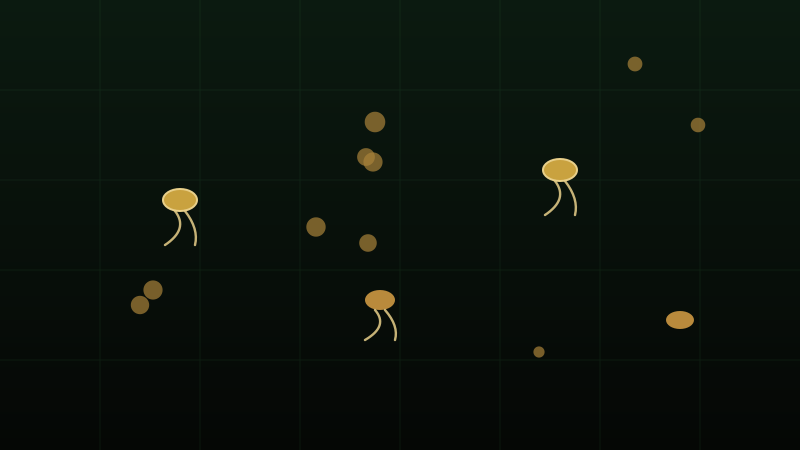
Isochrysis is the organism that made industrial marine hatcheries possible. Small, digestible, DHA-rich, with strains for warm or temperate work — it is the flagellate against which every alternative is measured, and the species our own ration tables open with.
- What it is
- A small, wall-free haptophyte flagellate — the most widely used marine hatchery feed species.
- Taxonomic group
- Haptophyta (Isochrysidales); the warm-water strain T-Iso is now classified as Tisochrysis lutea.
- Typical appearance
- Tiny golden-brown ovoid cells with two flagella; no rigid cell wall.
- Typical size
- Cells roughly 4–6 µm.
- Culture characteristics
- Reliable under hatchery conditions; T-Iso was selected for temperature tolerance. Less neglect-proof than Nannochloropsis — redundancy matters.
- Major applications
- Bivalve larval feeds, green water, rotifer production, copepod diets, DHA enrichment.
- Typical users
- Bivalve, finfish and shrimp hatcheries, live-feed rooms, copepod culturists, phytoplankton suppliers.
Why aquaculture values it
Isochrysis earns its default status by lining up size, digestibility and DHA in one organism. It feeds nearly every marine larval system somewhere in the cycle: directly to bivalve veligers, indirectly to fish larvae via rotifers, and as the small-cell component of copepod diets. See why Isochrysis matters in aquaculture for the fuller story.
Nutrition and important compounds
Its lipid signature is the point: DHA-rich, with the fatty acids marine eggs and larvae need and cannot efficiently synthesise. Wall-free cells make that payload accessible to grazers. EPA content is more modest, which is why blends with Pavlova or diatoms are standard.
A note on culture parameters
Strain matters enormously here: T-Iso and original I. galbana strains differ in temperature tolerance and growth behaviour. Attribute any published culture number to the strain it was measured on.
Frequently asked questions
What does T-Iso stand for?
'Tahitian Isochrysis' — a thermotolerant strain isolated from Tahiti, now classified as its own species, Tisochrysis lutea. It is what most hatcheries mean when they say 'Iso'.
Does Isochrysis need aeration?
It is a motile flagellate but still benefits from gentle mixing to keep cells distributed and gas exchange happening. Most hatcheries aerate all flagellate cultures.
Isochrysis vs Nannochloropsis?
Isochrysis is the nutritious, slightly delicate DHA source; Nannochloropsis is the hardy, EPA-rich green-water workhorse. Most systems run both.