Aquaculture · Species focus
Pavlova vs Isochrysis for Aquaculture
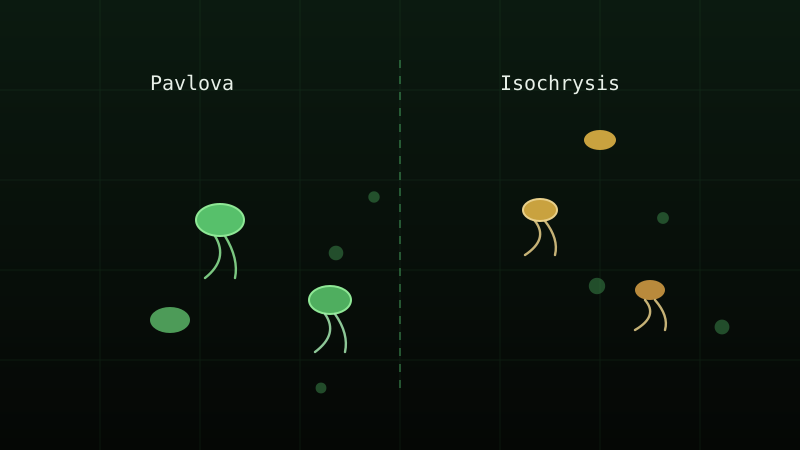
Pavlova and Isochrysis are cousins: both small haptophyte flagellates, both staples of marine hatcheries, both valued for the long-chain fatty acids that marine larvae need. They get compared constantly, so here is the comparison, with honest caveats.
Where they are similar
Both are small (roughly 4–8 µm), motile, wall-free or thin-walled cells that first-feeding animals can capture and digest. Both grow in standard marine algal media under hatchery conditions. Both carry meaningful amounts of DHA and EPA — the fatty acids that decide whether eggs become larvae and larvae become juveniles. Functionally, either can play the 'small nutritious flagellate' role in a feed program.
Where they differ
- Fatty-acid emphasis. Isochrysis (especially T-Iso) is famous for DHA; Pavlova brings a somewhat more balanced EPA-plus-DHA profile. For DHA-driven applications — many marine fish eggs — T-Iso is the classic. For EPA-heavy rations, Pavlova earns its slot.
- Culture behaviour. T-Iso was selected for warmth tolerance; Pavlova lutheri is known for tolerating a wide range of salinities, and related Pavlova species tolerate very high salt. 'Hardy' is relative for both — neither matches Nannochloropsis for indifference to care.
- Track record. Isochrysis is the more universal default across fish, bivalve and crustacean hatcheries; Pavlova is especially entrenched in bivalve and oyster work and as a broodstock-conditioning component.
Why systems run both
A two-flagellate blend hedges nutritional gaps and culture crashes at the same time. That is why published bivalve and copepod rations almost never say 'Isochrysis or Pavlova' — they say both, in ratios that shift by stage and species. If you are building a culture room for live feeds, those two plus one hardy green (Tetraselmis or Nannochloropsis) cover the great majority of marine live-feed needs.