
BioPhyte™-Novel Microalgal Blend for bivalves
Discover our exclusive phytobloom products featuring 5 essential phytoplankton species that enhance the growth and survival of bivalves and copepods. Perfect for both hobbyists and aquaculture farms.
ALGAE
3/1/20265 min read
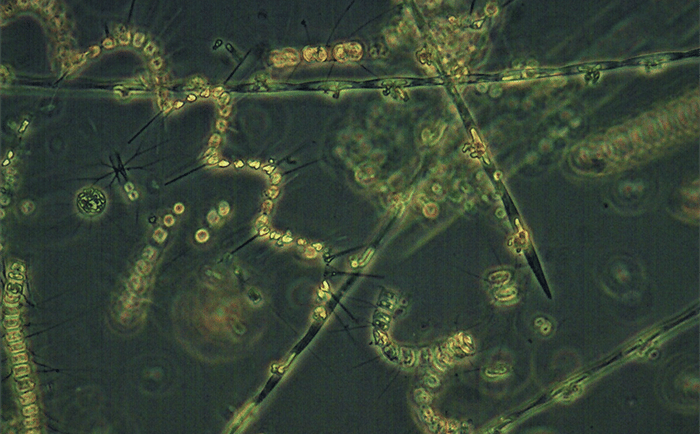
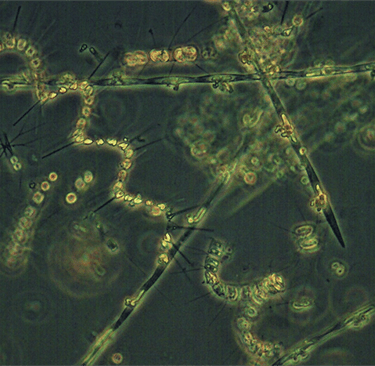
Phytobloom is our product that functions as a multi-functional mixture designed to have all the essential nutrients needed for your bivalves, copepods, rotifers, and other filter feeders. Our living high density microalgae culture is perfect for improved coloration and health, but also at an affordable price.
You may wonder; why pay a premium for our mixture? Try out our blend once and then you will realize how we outperform literally every other competitor out there on the market.
This guide is literally a compilation of many experts in the PHD field researching every aspect of nutritional requirements.
Ratios are a trade secret.
Isochrysis Galbana-Golden Lipids
Isochrysis ranges in size from 4-6 microns, making it digestible very early on from the D-Hinge stage of bivalve larvae. Furthermore, Isochrysis is prized for it's ability to manufacture high amounts of the lipid DHA, necessary for nervous system development of bivalves. Isochrysis synthesizes fucoxanthin as it's primary accessory pigment, because in nature this functions similarly to chlorophyll by helping to absorb light wavelengths in the blue green spectrum in unideal lighting conditions. Fucoxanthin also functions as an antioxidant, important for managing free radicals larvae may encounter. What makes this species so special is that this strain accumulates up to 20% DHA, which is why it has a golden hue.
Despite it's many advantages, Isochrysis gives bivalve larvae triglyceride forms of DHA, which can be metabolically more difficult to digest than phospholipids that Rhodomonodas provides. Very early larvae do not develop bile salt emulsification until Pediveliger stage, meaning the DHA triglycerides are harder to extract. TAGs are literally oil droplets that you can see under the microscope in healthy Isochrysis cultures. Basically, the phospholipids in the cell membranes are bioavailable DHA bricks the larvae need to survive.
In the practical manual for hatchery culture of bivalves, it is important to distinguish Tisochrysis and Isochrysis, which are from an evolutionary basis similiar, yet a side by side comparision shows I. galbana having higher DHA content. This species used to be classified as an Isochrysis "Taihiti" strain, but was later classified as T. Lutea.
Fucosterols found in Isochrysis can not be synthesized into usable sterols, as the scientific community has come to a consensus that the C29 sterols are unable to be dealkylated into available sterols due to it's bonding structures.
The hatchery culture of bivalves: a practical manual
www.semanticscholar.org/paper/A-Review-of-the-Nutritional-Requirements-of-and-the-Knauer-Southgate/f1b31f880a691f5e8e5c9f570edc04a9a89bb3d2. Accessed 12 Apr. 2026.
www.sciencedirect.com/science/article/abs/pii/S0044848606001165. Accessed 12 Apr. 2026.
Pavlova Lutheri
Pavlova is a haptophyte lacking a cell wall and is 4-9 microns in size, making it valuable for larvae. Pavlova is a unique microalga that makes 22-dehydrocholesterols. Sterols are something that larvae can not make themselves, it must be given to them is some shape or form. Many sterols from other algae are actually phytosterols which are harder to convert into animal sterols that bivalve larvae need to survive. Brassicasterols are a type of phytosterol found in Tetraselmis and other marine diatoms. They need to undergo dealkylation via specific enzymes to be converted into usable animal sterols. 22-dehydrocholesterol only needs to be reduced by one double bond in order to be usable. This means Pavlova produces more bioavailable sterols that are more readily uptaken by bivalve larvae utilizing less resources. While larvae are growing, they need cholesterols so their vesicles can deliver calcium to their forming shells. Deficiency can cause calcification failure. Furthermore, Pavlova Lutheri encompasses both EPA and DHA in similarly moderate amounts; the importance of this should not be understated. It is safe to say this microalga has the best lipid profile of any microalga.
Additionally, Pavlova has been cited as a great feed for the D-Stage for bivalves due to it's small size.
www.sciencedirect.com/science/article/abs/pii/S1095643397004510. Accessed 12 Apr. 2026.
"Incorporation of microalgae sterols by scallop Pecten maximus (L.) larvae" Author: Soudant, P., et al. (1998)
Sterolic biomarkers in marine phytoplankton. I. Free and conjugated sterols of Pavlova lutheri (Hapt
The hatchery culture of bivalves: a practical manual
www.sciencedirect.com/science/article/pii/S0300908425000951. Accessed 12 Apr. 2026.
Tetraselmis Chui
A rapidly growing green prasinophyte high in carbohydrates, which help metamorphosis and juvenile/spat for energy intensive processes. Tetraselmis is robust and heavily used in aquaculture. One of the most important traits of Tetraselmis species is their ability to harbor symbiotic bacteria. This is the only algae culture that we do not keep 100% sterile and axenic, because these symbiotic bacteria actually make B12, essential for bivalve shell formation. Moreover, Tetraselmis has a diverse profile of amino acids that are paramount for constructing proteins.
Being a Chlorophyte, Tetraselmis actually stores it's carbohydrates similarly to land plants in the form of type a-glucan starches (think potatoes) which are easily converted to an energy source by alpha amylase. Another benefit of Tetraselmis is that it's cell walls are composed of "scales" called a theca which acts like a protective envelope. Although this has evolved to resist high pressure environments, Tetraselmis still vulnerable to the digestive enzymes in bivalve larvae.
It is important to consider this microalgae is quite large at 10-30 microns, so it should be fed to the pedivelinger stage before metamorphosis.
Tetraselmis suecica F&M‐M33 growth is influenced by its associated bacteria - PMC
The amino-acid and sugar composition of 16 species of microalgae used in mariculture - ScienceDirect
www.sciencedirect.com/science/article/abs/pii/S0734975018300399. Accessed 13 Apr. 2026.
Paterson, Samuel, et al. “Bioactivity and Digestibility of Microalgae Tetraselmis Sp. and Nannochloropsis Sp. as Basis of Their Potential as Novel Functional Foods.” Nutrients, U.S. National Library of Medicine, 2023, pmc.ncbi.nlm.nih.gov/articles/PMC9861193/#sec4-nutrients-15-00477. Accessed 13 Apr. 2026.
Rhodomonadas salina - Antioxidant and ARA Lipids
Beloning to the phylum cryptophyta, Rhodomonadas salina is the best and logistically worst red microalga to use for larvae. It's periplast (memberane) is composed of DHA and EPA phospholipids that are 50% easier to digest than traditional oils. Rhodomonadas also contains the unique burgundy pigment phycoerythrin acting as an antioxidant for reactive oxygen species. Additionally, the thin cell membrane allows for instant digestion requiring little enzymes to lyse.
The main drawback to Rhodomonadas salina is the logistics of shipping. Owing to it's delicate nature, Rhodomonadas needs to be shipped with cool temperatures and maintained with absolute precision.
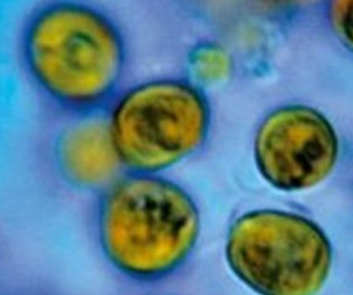
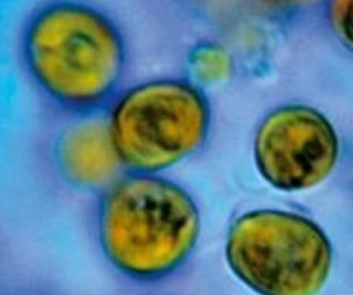
Chaetoceros calcitrans-Glass Powerhouse
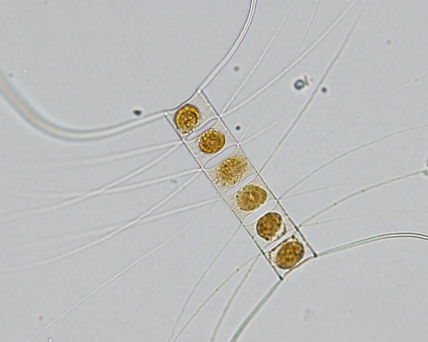
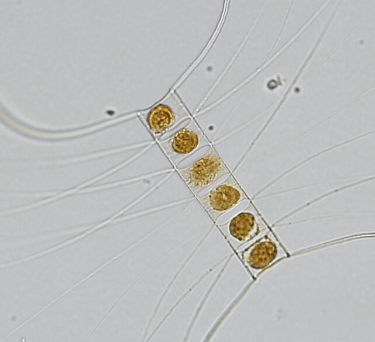
Chaetoceros calcitrans is an essential diatom that provides high amounts of fatty acids, especially EPA. It is 3-5 microns in size and is very lightly silicified, making it available for digestion very early on in D-Hinge stage larvae. Adding Chaetoceros increases immune cell activity and showed antioxidant activity due to the presence of fucoxanthin.
www.sciencedirect.com/topics/agricultural-and-biological-sciences/chaetoceros. Accessed 15 Apr. 2026.
COMING SOON!
© 2026 Orr Biologicals. All rights reserved.