Stop using Nannochloropsis!
Blog post description.
ALGAE
4/4/20262 min read
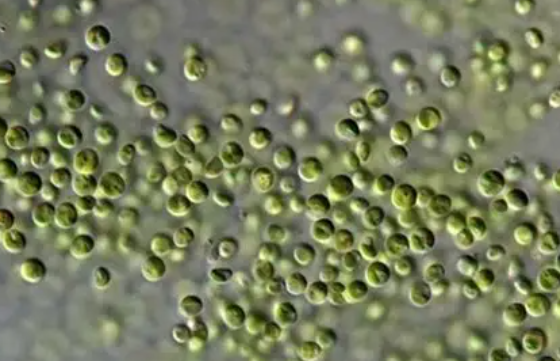
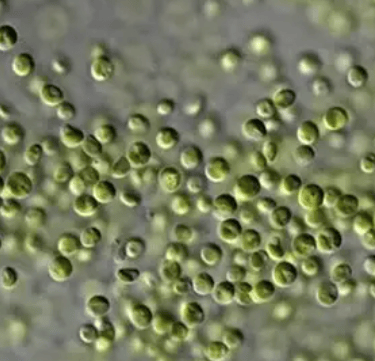
"Studies show that thick-walled microalgae exhibit poor digestibility compared to species with thin cell walls or which lack cell walls [6,21,25,27,28,29,30,31]. Microalgae belonging to genera including Nannochloropsis, Chlorella, Haemotococcus, and Desmodesmus have thick cell walls, whereas species like Isochrysis galbana, Porphyridium cruentum, and Dunaliella salina lack cell walls." Nannochloropsis cells are enclosed in a bilayer of cellulose and algeanen. Bivalves and copepods physically cannot digest Nannochlorpsis cells, as they do not make the enzyme cellulase, necessary to convert cellulose to usable glucose. However, Nannochloropsis can be digested by copepods via their gut microbiome and their silicified mandibles, although this is much less efficient that enzymatic digestion. Keep in mind that as Nannochloropsis cells get older, they start to lose their cell wall integrity potentially making them easier to digest. Bivalve larvae on the other hand will not consume nannochloropsis, as it does not have moving teeth. Rather, bivalve larvae are passive filter feeders that NEED thin cell walled microalgae.
Part of the reason why Nannochloropsis is so endeared by the aquaculture industry is because of it's resilience and ease of growth. This microalgae is the dandelion weed of the aquaculture industry.
Nannochloropsis is a EPA powerhouse, so we should find a way to make it digestible. We can do this by finding a cell wall deficient strain of it or process it in a similar way to make it bioavailable. This has been done with Chlorella Vulgaris, a microalgae with tough walls used for supplements, by using a process called bead milling.
So you may ask how we provide EPA, and essential lipid, to larvae? Enter Chaetoceros muilleri, a marine diatom that is small and provides EPA.
Annamalai, Senthil Nagappan, et al. “Nutrients and Energy Digestibility of Microalgal Biomass for Fish Feed Applications.” MDPI, Multidisciplinary Digital Publishing Institute, 29 Nov. 2021, www.mdpi.com/2071-1050/13/23/13211. Accessed 04 Apr. 2026.
"Silicified mandibular blades of marine calanoid copepods.
Scholz MJ;Weiss TL;Jinkerson RE;Jing J;Roth R;Goodenough U;Posewitz MC;Gerken HG; “Ultrastructure and Composition of the Nannochloropsis Gaditana Cell Wall.” Eukaryotic Cell, U.S. National Library of Medicine, pubmed.ncbi.nlm.nih.gov/25239976/. Accessed 04 Apr. 2026.