Cultivation · Scaling
How to Scale a Microalgae Culture
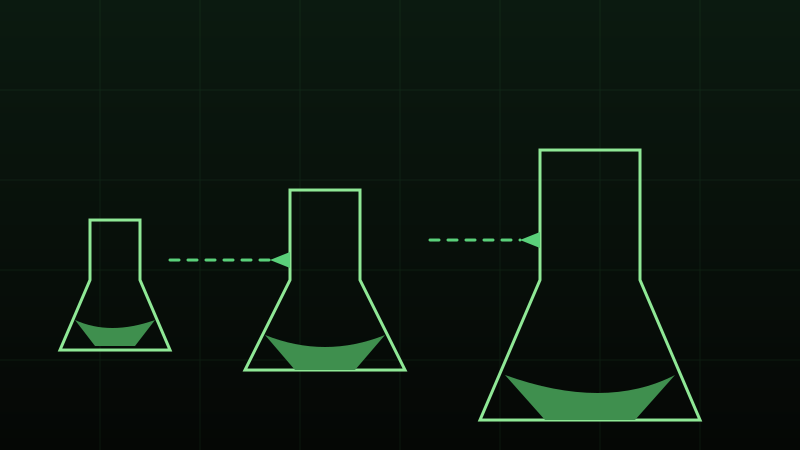
Scaling microalgae is a chain of transfers: a test tube seeds a flask, the flask seeds a bottle, the bottle seeds a column or tank. The biology does not change between steps — but light does, risk does, and so does the cost of a mistake. This is the craft of scaling up without losing the culture.
Time transfers to the growth curve
A culture grows fastest when it is healthy and not yet dense; it declines when nutrients exhaust and self-shading deepens. Seed the next vessel from an actively growing culture — visibly coloured, before it peaks — rather than an old one. An inoculum of vigorous cells establishes in days; tired cells sulk for weeks and invite contamination.
Respect the light problem
The biggest physical change in scaling is self-shading. In a 250 ml flask, most cells take turns in the light. In a 100 L tank, most cells are in the dark most of the time. That is why large systems are thin (panels, columns, raceways), vigorously mixed, and often artificially lit. If your scale-up suddenly seems slow, it is usually geometry, not biology. Our digital-twin work exists because light through dense algae is predictable enough to model — see the Algaephyte system page for that story.
Keep reserves at every rung
- Never transfer your entire volume upward — hold back a portion as a smaller, younger culture.
- Keep one or two reserve cultures per strain at starter scale, on a slower schedule.
- Treat reserves as sacrosanct: they are what you restart from when production crashes.
- Label everything with species, source and date. Future you is a different person.
What changes at volume
At volume, small habits matter more: a contaminated transfer wastes weeks, a missed nutrient dose costs a batch, and temperature swings take longer to correct. This is where monitoring graduates from 'look at it daily' to sensors and logging — optical density, temperature, pH. Algaephyte began as our own answer to that transition: the same culture, watched continuously, with every automated action gated by a physics model. Scale happily; with a logbook at minimum, and instrumentation when the crop matters.