Aquaculture · Systems
How Phytoplankton Supports Aquaculture Food Webs
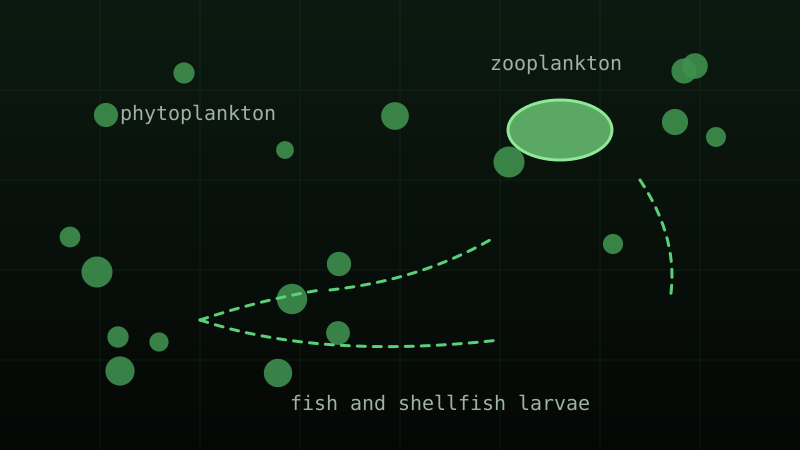
Every animal aquaculture grows is either a plant-eater one step removed or two steps removed from algae. Bivalves eat microalgae directly. Fish larvae eat zooplankton that ate microalgae. Shrimp post-larvae graze biofilms built on algal production. When a hatchery works, it is because someone kept the bottom of that chain healthy.
The two-step chain, concretely
Link one: cultured microalgae — small flagellates like Isochrysis and Pavlova, green cells like Tetraselmis, diatoms like Chaetoceros — turn light, CO₂ and nutrients into biomass with a specific biochemical signature: EPA, DHA, sterols, pigments.
Link two: zooplankton — rotifers, copepods, Artemia — eat the algae and either pass that signature on or upgrade it by synthesising compounds the algae lacked. Larvae of fish, shrimp and shellfish then eat the zooplankton (or, for bivalves, eat link one directly). Nutrition flows uphill with losses and transformations at every step; the algae decide what is even available to flow.
Why the bottom of the chain decides the top
Marine larvae cannot make EPA and DHA efficiently, so those compounds must arrive pre-made — in the algae, or in zooplankton that recently ate the right algae. A larva is nutritionally downstream of a flask of Nannochloropsis or T-Iso grown days earlier. This is why we keep saying the algae room is the real engine room: density crashes, old cultures, or a mono-species rut at the bottom show up weeks later as poor hatching and weak metamorphosis at the top.
Two ways to run the same biology
Intensive live feeds grow algae in flasks and tanks, feed them to zooplankton cultures, and dose both into larval tanks — controlled, expensive, precise. Pond fertilisation fertilises water to grow algal blooms that feed the natural food web in place — cheap, less controlled, the backbone of much of the world's aquaculture. Same principle, different concentration of effort. Algaephyte's platform — sensors, a growth twin, gated dosing — is built for the intensive version, where the algae are a crop with measurable state.