Cultivation · Getting started
How to Start a Phytoplankton Culture
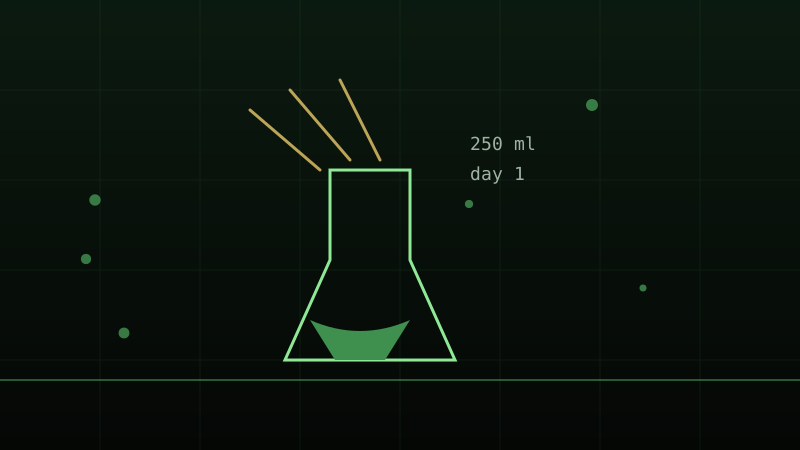
Every phytoplankton culture you will ever run descends from a single starter. Starting one well is less about chemistry and more about early care: small volumes, steady light, and the discipline to leave it alone. This is the sequence we recommend to anyone beginning.
Step one: choose the species on purpose
Decide what the culture is for, because that decides the species. Feeding a marine reef or copepod population points toward small flagellates and green cells (Nannochloropsis, Tetraselmis, Isochrysis); freshwater herbivores point toward Chlorella. Our species guides summarise each organism's temperament. Do not begin with a species whose requirements you cannot describe in one sentence.
Step two: source clean starter material
Culture collections and reputable aquaculture suppliers sell known strains with known histories — the least risk. Live cultures from other hobbyists work but inherit their owner's contaminants. Environmental capture (seawater, pond water) is the most interesting and least reliable route: you get whatever was dominant that week, plus its hitchhikers. For a first culture, pay the small cost of a clean starter.
Step three: set up small and steady
Begin with one or two small vessels (250–500 ml) of prepared medium at the salinity the species expects — standard media such as f/2 exist for marine species so you need not improvise chemistry. Place them somewhere with consistent, moderate light and a stable temperature, and agitate gently (swirl daily at minimum; a small air stone is better). Cap loosely enough to exchange gas. Then the hard part: do almost nothing for several days except observe.
The first two weeks
A healthy culture tells you it is working: colour deepens day by day, cells stay suspended, and nothing smells but green. When the culture is visibly dense, subculture part of it into fresh medium rather than letting it coast into decline. Keep the original going as a reserve. Once two or three transfers succeed, you own the strain — everything after that is the rhythm described in how to grow a microalgae culture, plus the hygiene habits from our contamination guide.