Species guide
Haematococcus
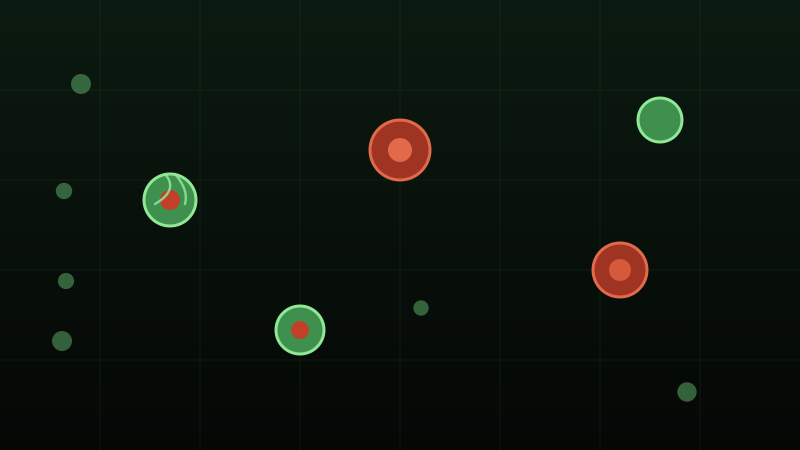
Haematococcus pluvialis is the drama queen of microalgae: green and motile when comfortable, red and cystic when stressed — and that red is astaxanthin, one of the highest-value molecules any photosynthetic organism makes.
- What it is
- A freshwater green microalga famous for accumulating astaxanthin — the red ketocarotenoid that colours salmon and shrimp.
- Taxonomic group
- Chlorophyta (green algae); Haematococcus pluvialis is the cultivated species.
- Typical appearance
- Two life stages: green motile flagellated cells in good conditions; large red non-motile cysts under stress, packed with astaxanthin.
- Typical size
- Cells roughly 20–50 µm — large for a microalga.
- Culture characteristics
- Two-phase culture: grow green biomass fast, then stress it (high light, nutrient starvation) to induce red cysts. Slow-growing compared to feed algae — which is why astaxanthin is expensive.
- Major applications
- Astaxanthin for aquaculture pigmentation (salmon, shrimp), nutraceutical supplements, cosmetics research.
- Typical users
- Astaxanthin producers, aquafeed formulators, nutraceutical companies, photobioreactor operators.
Why aquaculture values it
Haematococcus is the reason farmed salmon are pink. Its astaxanthin is the premium natural pigment for salmonid and shrimp feeds, and a fixture of the nutraceutical market. For a live-feed culturist it is a specialty crop, not a daily ration — see our biotechnology overview for where it sits commercially.
Nutrition and important compounds
Astaxanthin is the headline compound: a powerful antioxidant ketocarotenoid produced as a photoprotective stress response. Content varies enormously with strain and stress regime; published percentages are ranges achieved under specific conditions.
A note on culture parameters
The two-phase culture makes Haematococcus unusually sensitive to process design: green-phase conditions and red-phase stress triggers differ between producers and are often proprietary. Published numbers describe one producer's recipe, not the species' limits.
Frequently asked questions
Why is astaxanthin expensive?
Haematococcus grows slowly, needs a two-stage process, and must be stressed carefully to produce the pigment — all against cheap synthetic alternatives that lack the natural market's premium.
Can Haematococcus be used as a live feed?
Rarely — its cells are large and slow to mass-produce. Its role is extraction and pigmentation, not daily rations.
Green cells and red cells are the same organism?
Yes. Motile green cells in growth phase; the same individuals become large red cysts under stress, storing astaxanthin to protect themselves.