Applications · Fermentation
Kombucha, kept simply.
Kombucha is sweet tea fermented by a symbiotic culture of bacteria and yeast (a SCOBY) into a lightly effervescent, acidic drink. The craft is timing and attention, not mystique.
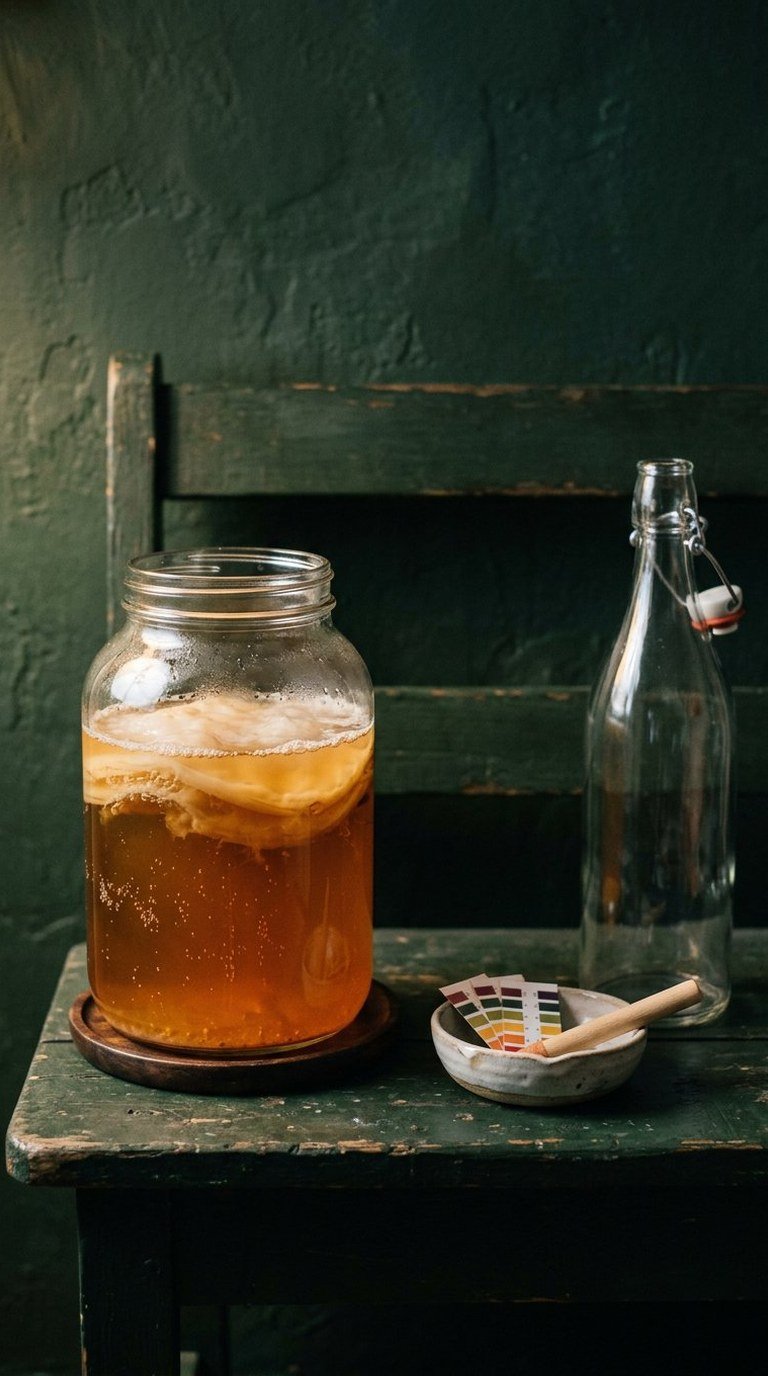
What the culture is doing
Yeasts convert tea sugars into ethanol and carbon dioxide; bacteria then oxidise that ethanol into organic acids — principally acetic and gluconic acids — producing kombucha’s tang. Two organisms are doing opposite halves of the work, and both are held together in a cellulose pellicle. Analysis of the drink’s composition across studies shows its chemistry tracks fermentation time and ingredients rather than any fixed recipe.
The short version
- The first ferment, step by step — sugar, tea, temperature and the 7–10 day clock
- Mould or pellicle — reading the surface without guessing
Typical ranges, honestly labelled
| Dial | Common practice range | Notes |
|---|---|---|
| Sugar | ~50–70 g per litre of tea | Feeds the culture; little remains in the finished drink when fermentation runs long. |
| Tea | Black or green, 1–2 tbsp leaves per litre | Tea supplies nitrogen; herbal-only bases starve the culture. |
| Temperature | Roughly 21–30 °C | Below ~18 °C the ferment slows dramatically; above ~35 °C the culture can be damaged. |
| Acidity | Finished pH typically ≤ 3.5 | pH at or below ~3.5 is the conventional marker that the ferment stayed dominated by the right organisms. |
| Time | 7–10 days, first ferment | Taste from day 5; sweetness is your timer. |
These are literature-informed typicals, not certified limits. Your water, tea strength and SCOBY history will move them.
Sources
- Jayabalan R, Malbasa RV, Loncar ES, Vitas JS, Sathishkumar M. “A Review on Kombucha Tea — Microbiology, Composition, Fermentation, Beneficial Effects, Toxicity, and Tea Fungus.” Comprehensive Reviews in Food Science and Food Safety, 2014. DOI: 10.1111/1541-4337.12073.
- Watawana MI, Jayawardena N, Gunawardhana CB, Waisundara VY. “Health, wellness, and safety aspects of the consumption of kombucha.” Journal of Chemistry, 2015. DOI: 10.1155/2015/591869.
Connect this guide to the wider research
This bench protocol connects to the guide shelf, cultivation conditions and monitoring and how we separate observations from guesses. Protocols are educational starting points — not validated production protocols.
Methodology and evidence status · Scientific definitions · Safety and scope.